
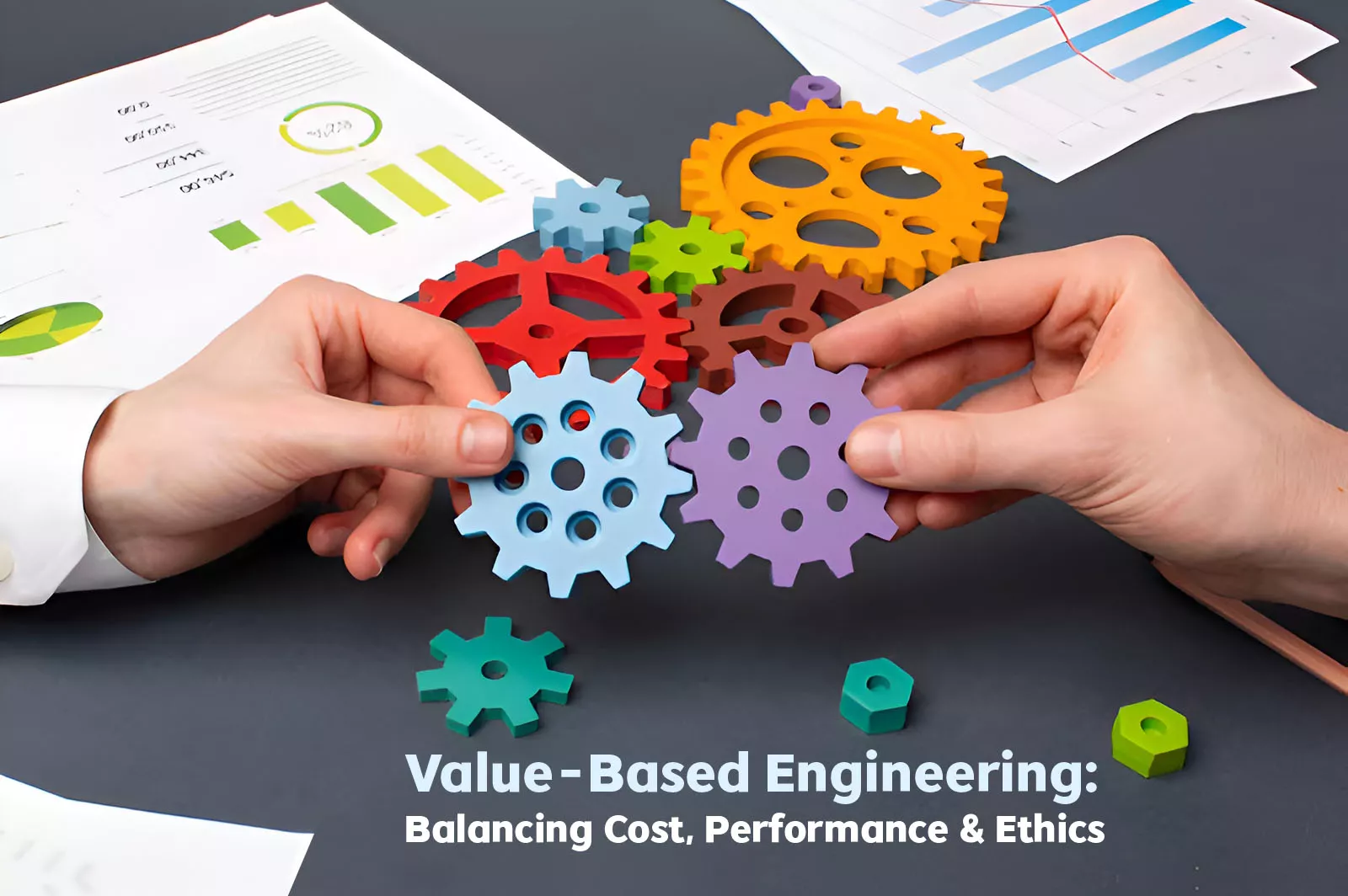
Balancing Cost, Performance & Ethics: The Rise of Value-Based Engineering
Balancing Cost, Performance & Ethics: The Rise of Value-Based Engineering in Design Consultancies
The engineering world is changing fast. Design consultancies are under increasing pressure — clients want faster and cheaper solutions, regulators are tightening compliance requirements, and society is demanding more ethical and sustainable engineering practices. In the middle of all these expectations, one approach is standing out as a smarter, future-ready way of working: Value-Based Engineering (VBE).
Unlike traditional methods that focus mainly on cost, performance, or deadlines, VBE takes a much broader view. It brings together economics, technical excellence, ethics, sustainability, and long-term value. Companies adopting this mindset aren’t just creating better designs; they’re building a reputation as responsible, trustworthy, and forward-thinking partners.
What Is Value-Based Engineering?
Value-Based Engineering is all about making design choices that consider the full picture — financial impact, performance, user needs, ethical responsibilities, and environmental implications.
Instead of aiming for the lowest upfront cost or the quickest solution, VBE prioritizes long-term value for every stakeholder.
Engineers following this approach think about:
- Total costs over the entire lifecycle
- Environmental footprint and sustainability
- Reliability, safety, and usability for end users
- Compliance with industry and societal standards
- Ethical sourcing and manufacturing
- Transparent communication and decision-making
In simple terms, VBE is engineering with accountability, foresight, and purpose.
Why Value-Based Engineering Matters Today
1. Clients Expect More Than Just Good Designs
Modern clients want solutions that last longer, perform better, meet safety standards, and align with sustainability goals.
2. Regulations Are Becoming More Demanding
From construction codes to environmental laws, compliance requirements are getting stricter every year.
3. Sustainability Has Become a Core Requirement
Efforts to reduce emissions, use greener materials, and minimize waste are now essential considerations in design.
4. Ethics Build Strong, Lasting Trust
Companies that prioritize responsible engineering earn stronger client relationships and a better brand reputation.
5. Better Design Choices Lead to Higher ROI
Value-driven engineering reduces failures, boosts reliability, and cuts long-term operational costs — saving clients money.
Core Pillars of Ethical & Value-Based Engineering
1. Cost vs. Long-Term Value
VBE encourages designers to look beyond initial expenses and consider:
- Long-term durability
- Maintenance requirements
- Operational efficiency
- End-of-life cost and recyclability
This ensures clients receive true value, not short-lived savings.
2. High Performance Without Compromise
Ethical engineering evaluates:
- Safety factors
- Risk levels
- User-centered functionality
- Fail-safe mechanisms
The goal is to deliver top performance while keeping safety and responsibility at the forefront.
3. Transparency at Every Stage
Clients appreciate clarity. VBE promotes:
- Clear documentation
- Honest comparisons of alternatives
- Open discussions about trade-offs
This creates trust and helps clients make informed decisions.
4. Sustainable & Ethical Material Selection
Designers consider:
- Recyclable or renewable materials
- Low-energy components
- Environmentally responsible manufacturing
- Ethically sourced materials
This reduces the overall environmental and social impact of a project.
5. Designing with the Full Lifecycle in Mind
VBE looks beyond the present by asking:
- How long will it last?
- Can it be repaired or upgraded?
- What happens at end of life?
Lifecycle thinking leads to more durable and future-proof engineering solutions.
How Design Consultancies Can Adopt Value-Based Engineering
1. Add Ethical Review Points in the Workflow
Integrate checkpoints to evaluate sustainability, cost trade-offs, risks, and ethical considerations.
2. Use Structured Decision-Making Tools
Decision matrices help compare options fairly across technical and ethical factors.
3. Involve Stakeholders Early
Collaborating with clients, users, suppliers, and partners early on ensures alignment and minimizes rework.
4. Invest in Training and Awareness
Workshops on safety, human-centered design, sustainability, and compliance can help teams stay updated.
5. Use Lifecycle Costing Tools
These tools help forecast long-term financial implications, supporting better decision-making.
6. Maintain Clear and Honest Documentation
Transparent reports build confidence and demonstrate the reasoning behind design choices.
Real Example: How VBE Creates Better Outcomes
Imagine a consultancy designing an industrial automation system with two component choices:
- Option A: Low-cost components that may fail in 3–5 years
- Option B: Slightly more expensive but energy-efficient components with a 10-year lifespan
Using Value-Based Engineering, designers would also assess:
- Energy usage
- Downtime costs
- Reliability
- Maintenance needs
- Environmental and safety impact
While Option B costs more upfront, it saves money in the long run, reduces environmental impact, and improves operational stability — making it the true value-driven choice.
Engineering’s Future Is Ethical, Transparent & Value-Focused
As industries advance and responsibilities expand, engineering must do more than solve technical problems. It must address long-term societal, environmental, and economic needs. Value-Based Engineering represents this shift — it’s not just a trend but a new standard of responsible innovation.
Consultancies that embrace this approach will:
- Build stronger, more loyal client relationships
- Stand out in competitive markets
- Stay ahead of regulatory changes
- Lead in sustainable and ethical design practices
In the years ahead, Value-Based Engineering could become the hallmark of world-class engineering services.