AI vs Human Analysts: The Future of Data-Driven Decisions
The conversation around AI and data analysts often sounds dramatic. Will AI replace analysts? Will humans become irrelevant? In 2025, that’s not really what’s happening.
What’s happening instead is quieter and more practical. The work is shifting. Decisions are still made by people, but the way we arrive at them looks very different than it did a few years ago.
What AI is genuinely better at
AI shines at the kinds of tasks humans tend to dread or simply can’t do at scale.
It’s very good at:
- Scanning massive datasets nonstop
- Spotting subtle patterns across thousands of variables
- Detecting anomalies as they happen
- Producing forecasts quickly and consistently
If you need metrics monitored, unusual behavior flagged, or trends summarized, AI handles it effortlessly. Tools built into platforms like Microsoft Power BI or Tableau do this all day without fatigue or distraction.
When it comes to speed and coverage, humans just can’t compete.
Where humans still matter most
Despite all the progress, AI doesn’t understand context the way people do.
Humans are better at:
- Deciding which questions are actually worth asking
- Understanding business nuance and tradeoffs
- Explaining insights to people who don’t live in dashboards
- Sensing when a result doesn’t quite add up
AI might tell you churn is likely to increase. A human knows whether that’s expected, acceptable, or a signal to change course. Judgment, experience, and intuition still matter.
The real shift: from doing to deciding
The biggest change isn’t that analysts are disappearing. It’s that their role has moved up the value chain.
Less time goes into:
- Cleaning data
- Writing repetitive queries
- Rebuilding the same dashboards
More time goes into:
- Interpreting results
- Stress-testing AI outputs
- Helping teams decide what to do next
Analysts are becoming decision partners rather than report factories.
AI doesn’t replace analysts. It exposes weak decisions
There’s an uncomfortable truth here. AI doesn’t fix poor decision-making.
When insights arrive faster and clearer, the real bottlenecks become alignment, incentives, and leadership choices. If teams ignore data or cherry-pick results, AI doesn’t stop that. It just makes it obvious.
Strong organizations use AI to sharpen thinking. Weak ones use it to justify decisions they already made.
What the future actually looks like
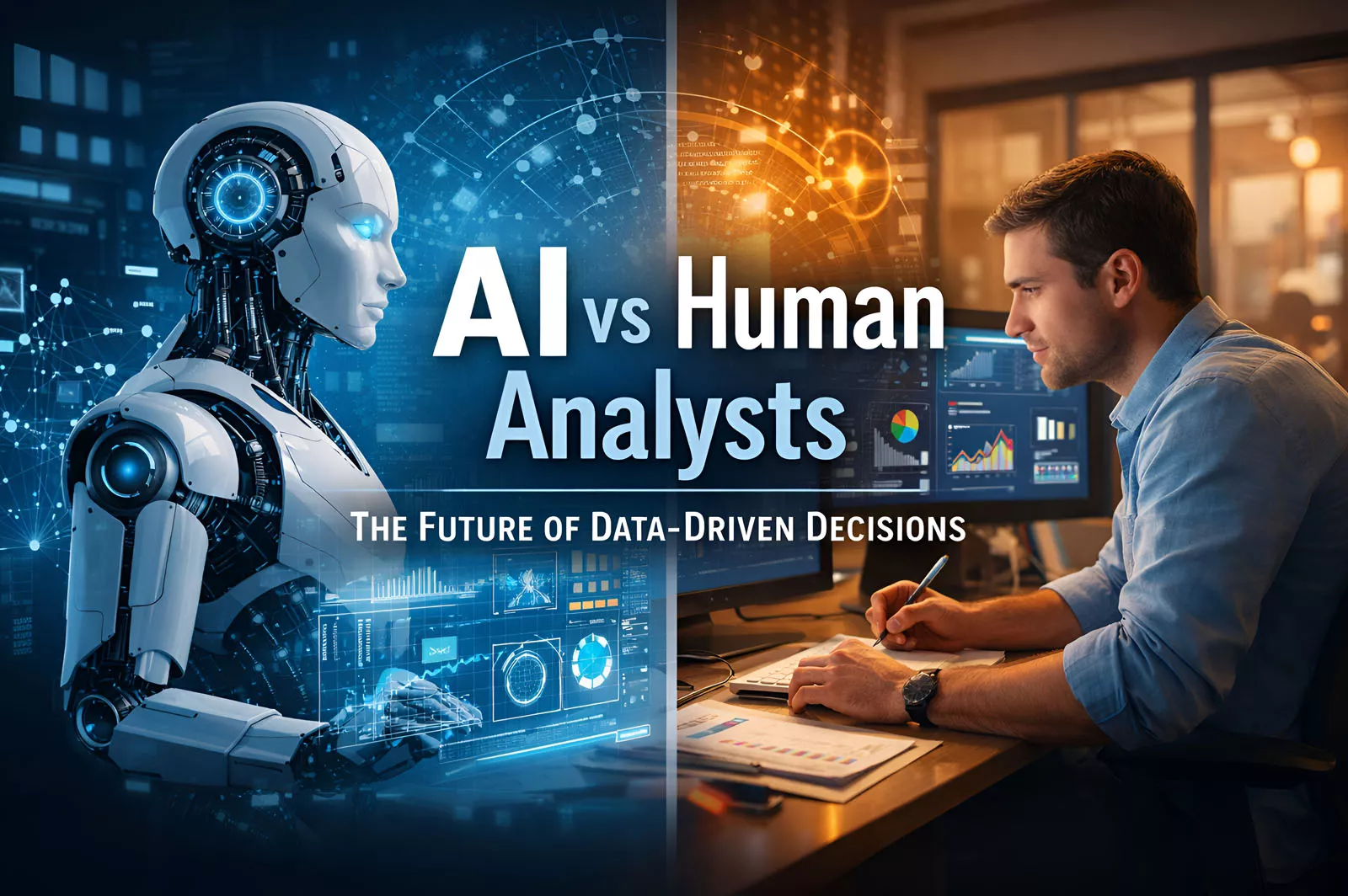
This isn’t AI versus humans. It’s AI alongside humans, each doing what they’re best at.
AI handles:
- Scale
- Speed
- Pattern detection
Humans handle:
- Meaning
- Judgment
- Accountability
The strongest teams treat AI as a capable assistant, not an unquestionable authority and not a threat.
Bottom line
AI is changing how decisions are informed, not who is responsible for them.
The best outcomes come from people who stay curious, skeptical, and engaged, while letting AI take care of the heavy lifting. The future belongs to analysts who know how to question machines, not compete with them.

Related to this topic:

The Role of Data Analytics in Modern KPO Operations