
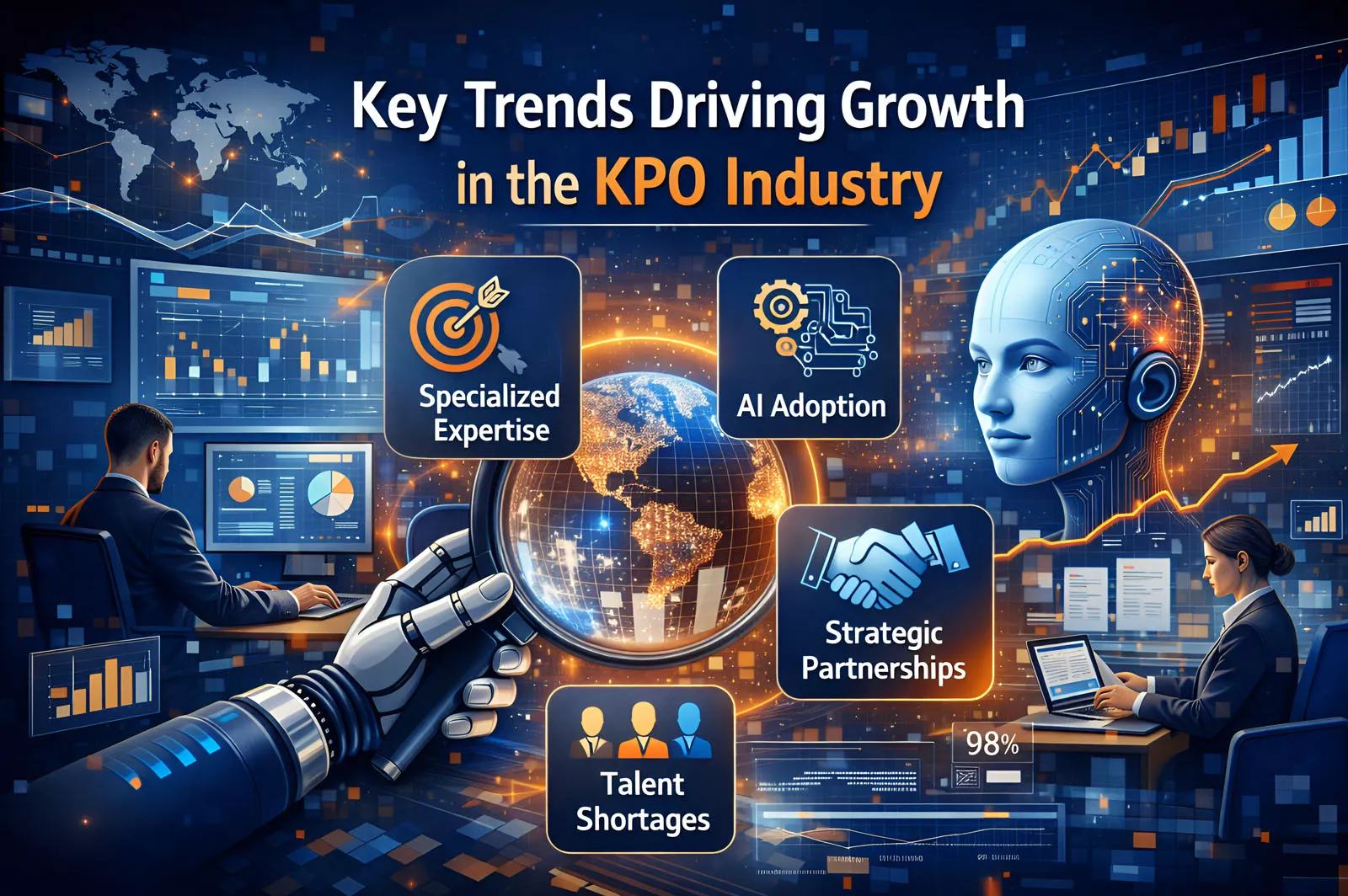
Key Trends Driving Growth in the KPO Industry
The Knowledge Process Outsourcing industry has been evolving steadily for years, but its recent growth is hard to miss. Businesses today are no longer outsourcing just to cut costs. They are doing it to gain sharper insights, make faster decisions, and access specialized expertise that is difficult to build internally.
Here are the key trends driving growth in the KPO industry and why demand continues to rise across sectors.
Growing Demand for High-Value Expertise
Modern businesses operate in fast-changing environments shaped by market volatility, regulatory updates, and constant data flow. This has increased the need for specialized expertise in areas such as financial analysis, market research, legal services, healthcare analytics, and engineering design.
KPO providers give companies access to domain experts who understand these complexities. Instead of building large internal teams, organizations rely on KPO partners for deep, on-demand insights. This shift from task-based outsourcing to expertise-driven collaboration is one of the biggest drivers of KPO growth.
Data Explosion and the Need for Better Insights
Every organization generates more data than ever before. The real challenge is not collecting it, but turning it into meaningful insight.
KPO firms help bridge this gap by analyzing data, identifying patterns, and translating findings into clear, actionable recommendations. Whether the focus is customer behavior, financial performance, or operational efficiency, businesses rely on KPO teams to turn information into direction.
Integration of Advanced Technologies
Technology is playing a major role in accelerating the growth of KPO services. Tools powered by artificial intelligence, machine learning, and automation allow KPO teams to work faster and more efficiently.
These technologies handle repetitive tasks like data processing, document review, and preliminary analysis. Human experts then focus on interpretation, strategy, and problem-solving. The result is higher accuracy, faster delivery, and more consistent outcomes for clients.
Shift Toward Strategic Partnerships
KPO relationships are no longer short-term or transactional. Many organizations now see their KPO providers as long-term strategic partners.
Rather than outsourcing individual reports, companies involve KPO teams in ongoing planning, forecasting, and decision support. This deeper collaboration builds trust and creates steady, long-term demand for KPO services across business functions.
Cost Efficiency Without Compromising Quality
Cost savings still matter, but they are no longer the only reason companies choose KPO. Organizations gain access to highly skilled professionals at a lower overall cost compared to building similar capabilities in-house.
What sets KPO apart is that efficiency does not come at the expense of quality. In many cases, specialized KPO teams deliver stronger results because their work is focused, structured, and backed by industry experience.
Expansion Across Industries
KPO services are no longer limited to finance or market research. Industries such as healthcare, pharmaceuticals, energy, manufacturing, and technology are increasingly adopting KPO models.
Each industry brings unique challenges, regulations, and data requirements, creating opportunities for specialized KPO solutions. This diversification supports steady and sustainable industry growth.
Rising Focus on Compliance and Risk Management
Regulatory pressure continues to increase worldwide. Organizations must comply with evolving standards related to data privacy, finance, healthcare, and environmental regulations.
KPO providers help businesses stay ahead by tracking regulatory changes, assessing risk, and supporting compliance initiatives. As regulations grow more complex, the need for knowledgeable KPO partners continues to rise.
Talent Shortages in Key Markets
Many organizations struggle to hire and retain skilled professionals, especially in analytics, finance, and research roles. KPO offers a practical solution.
By outsourcing knowledge-intensive tasks, companies gain immediate access to experienced talent without long recruitment cycles. This flexibility is especially valuable in competitive and fast-moving markets.
Looking Ahead
The growth of the KPO industry reflects a broader shift in how businesses view outsourcing. It is no longer about offloading work. It is about gaining insight, expertise, and strategic support.
As data volumes grow, technology advances, and skilled talent remains scarce, KPO services will continue to play a critical role in helping organizations compete and make better decisions.
Related to this topic:

How Generative AI Is Changing Knowledge Process Outsourcing

The Role of Data Analytics in Modern KPO Operations