
The Rise of AI in Clinical Trials—and the Future It’s Creating
The Rise of AI in Clinical Trials: How Artificial Intelligence Is Transforming Drug Discovery and Patient Care
If you’ve ever followed the journey of a new medicine—from a spark of an idea to a treatment that actually reaches patients—you know it’s rarely quick or simple. Many promising drugs never make it past the testing phase, and for the ones that do, the process often takes years and requires enormous resources.
But something remarkable is happening.
Artificial intelligence (AI) is stepping in as a powerful partner, helping researchers uncover new medicines faster, match patients more accurately, and run studies with a level of precision we couldn’t achieve before. Clinical trials are beginning to look very different from what they were even five years ago.
Let’s explore how AI is reshaping each part of the journey.
1. Rethinking Drug Discovery: From Guesswork to Guided Insight
Drug discovery has historically involved a lot of trial and error. Scientists sift through massive numbers of molecules, make educated guesses, run countless lab tests, and hope something sticks. It’s exciting work—but also slow and expensive.
AI is transforming this stage in three major ways:
Smarter Predictions
Machine learning models can now examine enormous datasets—far larger than any human team could realistically process—and predict which compounds are most likely to work. This means scientists spend less time chasing dead ends and more time refining the most promising candidates.
Designing New Molecules
Generative AI doesn’t just analyze data—it creates new molecular structures from scratch. These models can design molecules that fit specific criteria, cutting down months of manual experimenting.
Giving Existing Drugs a Second Life
Instead of starting from zero, AI can scan existing medications and identify which might be effective for other conditions. This “drug repurposing” approach can dramatically shrink development timelines.
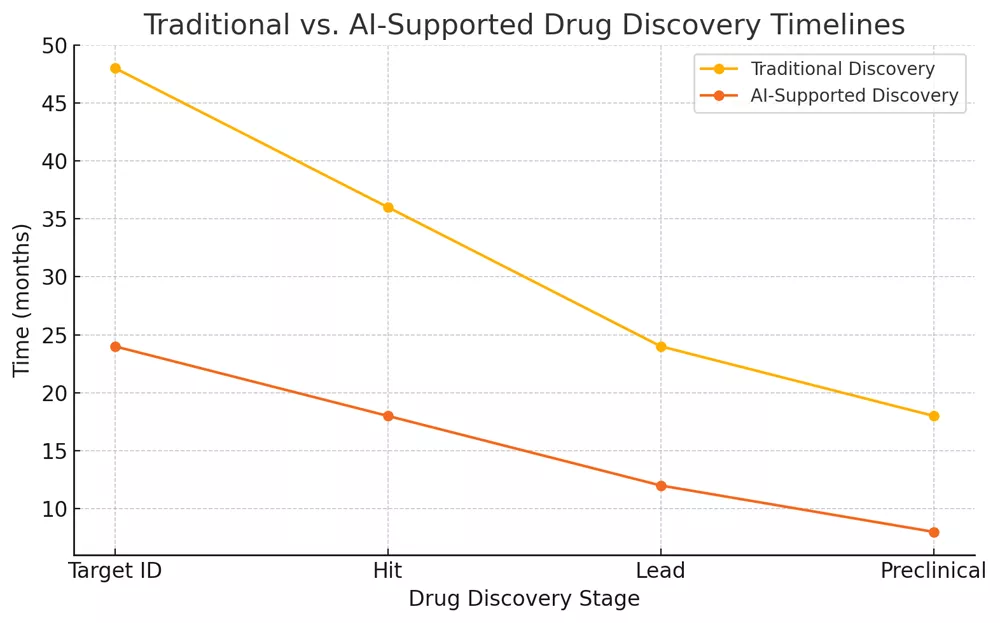
This line chart illustrates how AI-supported drug discovery dramatically shortens timelines compared to traditional methods.
2. Better Patient Matching: A Win for Both Science and People
Ask any clinical researcher, and they’ll tell you: finding the right patients is one of the hardest parts of running a trial. In fact, most delays in clinical research come down to recruitment issues.
AI is starting to change that:
Reading Between the Lines of Medical Records
AI tools can analyze medical histories, lab results, imaging, and doctors’ notes to spot patients who genuinely match the criteria—many of whom might otherwise be overlooked.
Including More Diverse Participants
Because AI can scan large and varied health datasets, it helps trial teams identify groups that have been historically underrepresented. That leads to more equitable research and medications that work for more people.
Predicting Patient Engagement
Some models can even flag patients who are likely to stay committed throughout the study, helping trials avoid costly dropouts.
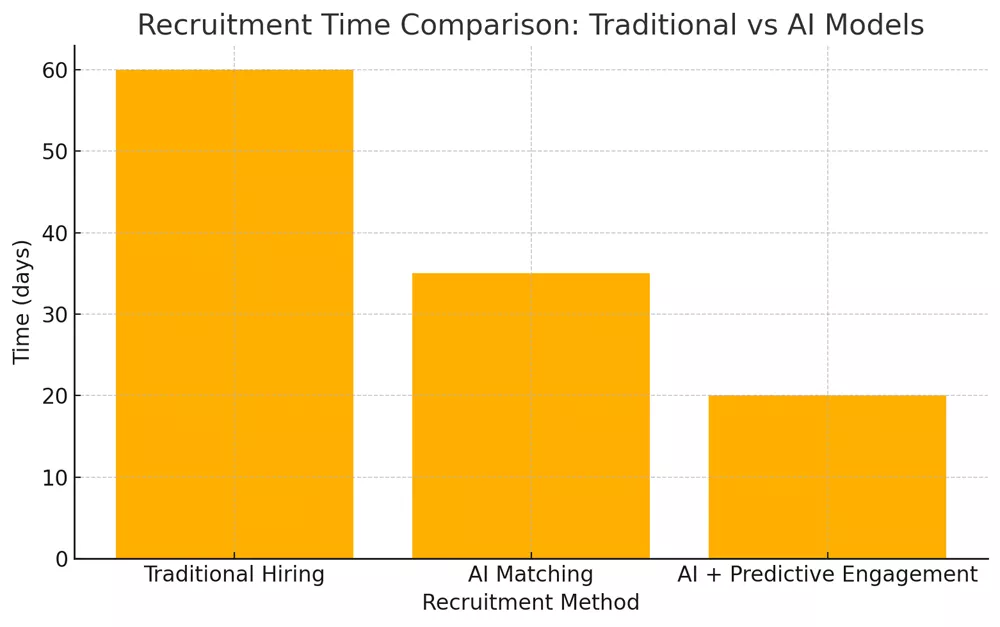
Recruitment Time Comparison: Traditional Hiring vs. AI-Driven Models
3. Smarter, Faster Trials: Improving Every Step of the Process
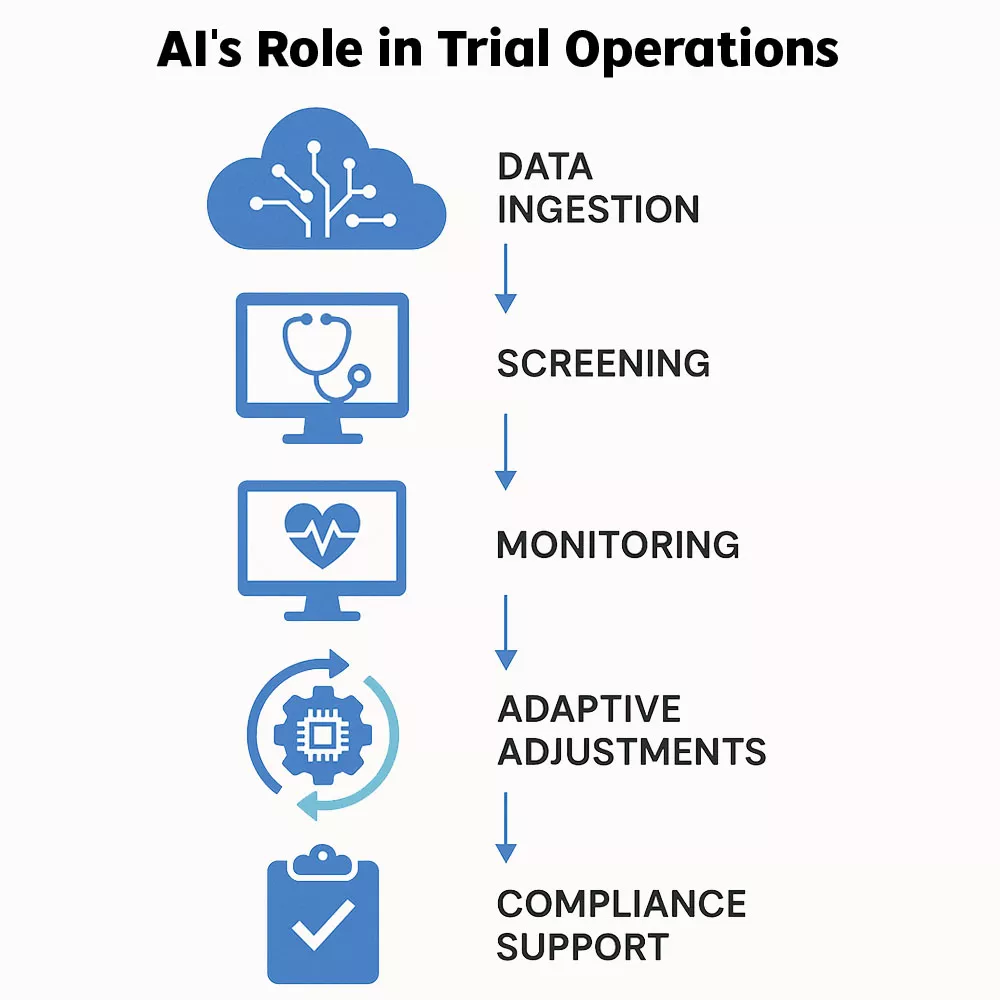
Once a trial begins, the work doesn’t get any easier. Teams collect huge amounts of data, monitor patient safety, adjust study protocols, and navigate complex regulations.
AI is helping here too:
Real-Time Monitoring
Instead of waiting for scheduled check-ins, AI can analyze incoming data from wearables, home devices, imaging, and digital diaries as it arrives. This allows teams to catch safety concerns early, identify trends, and make faster decisions.
Adapting as You Go
Some trials now use adaptive designs—meaning the study can change based on what early results show. AI models support these adjustments, helping determine when to modify doses, add or remove patient groups, or extend a study arm.
Reducing Paperwork Overload
Tools powered by natural language processing can help draft protocols, organize regulatory documents, and clean messy datasets. For busy researchers, this can feel like getting hours back in the day.
4. What’s Next? A Future Where AI and Researchers Work Hand in Hand
While AI is moving quickly, it’s not replacing scientists, clinicians, or trial teams. Instead, it’s making their work more precise, less repetitive, and more impactful.
Here’s what we can expect in the near future:
Truly end-to-end AI support
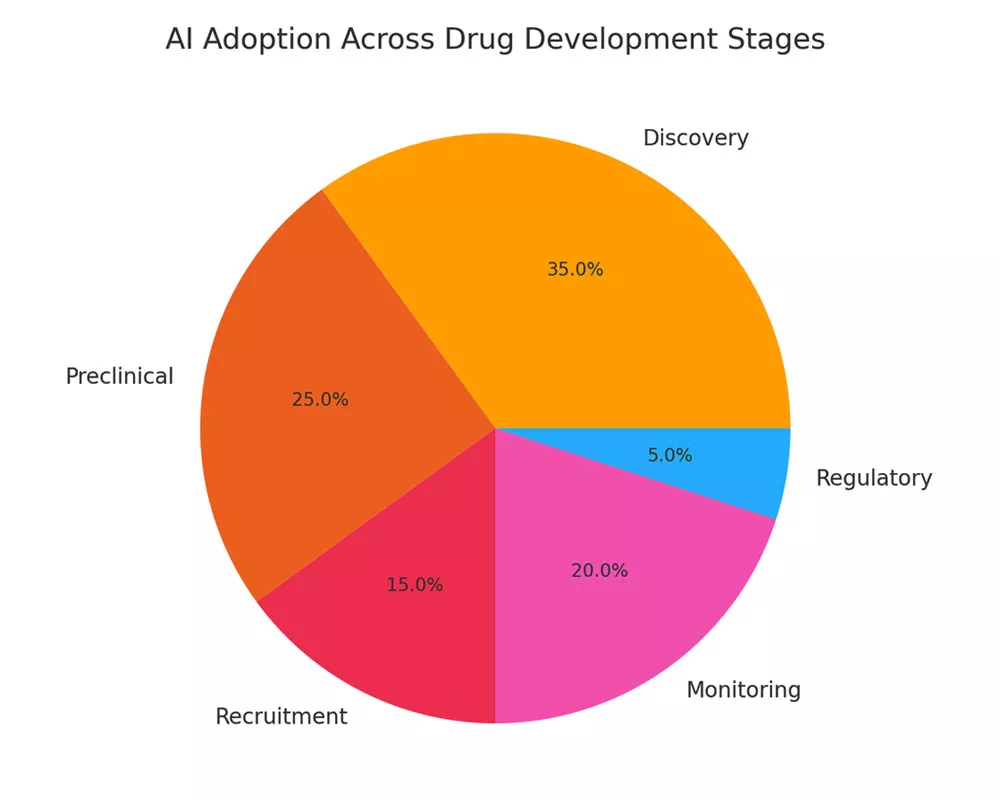
From molecule design to regulatory filing, AI will help guide decision-making at every step.
More decentralized, patient-friendly trials
AI-enabled tools will allow patients to participate from home, opening up access to people who can’t easily travel.
Better predictions about trial success
Before investing millions, companies will use AI to estimate which studies are most likely to work.
Stronger human–AI partnerships
The best outcomes will come from combining data-driven insights with human empathy, ethics, and clinical judgment.
Final Thoughts
AI isn’t just speeding up clinical trials—it’s making them more thoughtful, more inclusive, and more aligned with real patient needs. As these technologies continue to evolve, we’ll see a future where new treatments reach people faster, with fewer setbacks and more scientific confidence behind them.